
9 min read / Updated 2026-05-08
Prepared by the AutoRepairDiagram catalog team
30 Automotive Wiring Terms Every Technician Should Know
A clear glossary of essential car electrical terms, from voltage drop and ground reference to relay contacts, splices, CAN bus, pull-up circuits, and PWM signals.
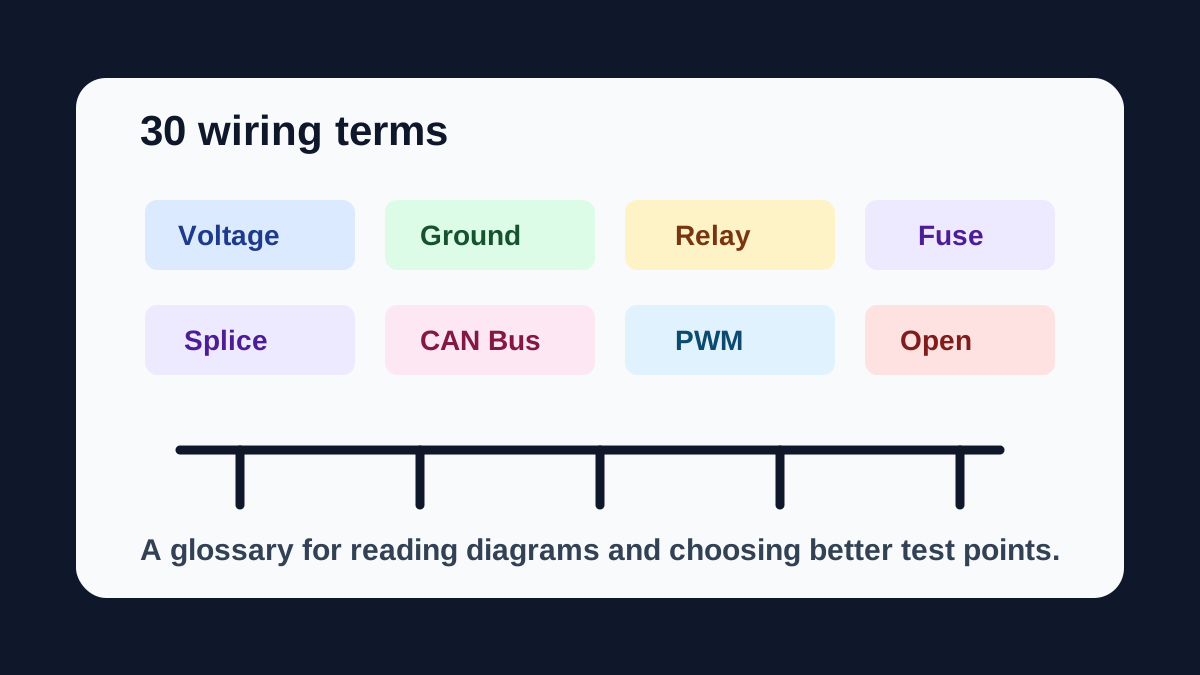
Power, ground, and circuit protection terms
1. Voltage is electrical pressure. 2. Current is the flow through the circuit. 3. Resistance is opposition to current flow. 4. Ground is the return path or reference point. 5. Voltage drop is the voltage lost across resistance while current flows.
6. Fuse is the protection device that opens during excessive current. 7. Fusible link protects larger feed circuits. 8. Short to ground means power touches ground before the load. 9. Short to power means a circuit receives voltage from the wrong source. 10. Open circuit means the path is broken.
Switching, relay, and connector terms
11. Relay coil is the control side that magnetically moves the relay. 12. Relay contacts are the load side that pass current. 13. Normally open means contacts are open until commanded. 14. Normally closed means contacts are closed until commanded.
15. Connector pin is a numbered terminal location. 16. Terminal tension is the grip between mating terminals. 17. Splice is a point where one wire splits to several branches. 18. Shielded wire protects sensitive signals from noise.
Module and signal terms
19. Input is information entering a module. 20. Output is a module command to a load or relay. 21. Reference voltage is a regulated supply, often 5 volts, for sensors. 22. Sensor ground is a clean return path for sensor signals.
23. Pull-up circuit holds a signal high until grounded or changed. 24. Pull-down circuit holds a signal low until voltage is applied. 25. PWM, or pulse width modulation, controls a load by switching rapidly.
Network and diagnostic terms
26. CAN bus is a communication network between modules. 27. CAN high and CAN low are paired communication lines. 28. Termination is resistance used to stabilize a network. 29. Backprobe means testing from the rear of a connector without damaging the terminal.
30. Load test means testing a circuit while it carries current. A circuit can show voltage with no load but fail when the component is connected, so load testing often reveals faults that simple checks miss.
Questions buyers ask
What wiring term should a beginner learn first?
Voltage drop is one of the most useful terms because it explains how a circuit can have voltage but still fail under load.
Why do wiring diagrams use connector pin numbers?
Pin numbers make testing repeatable. They tell the technician exactly where a wire enters or leaves a connector.