
8 min read / Updated 2026-05-08
Prepared by the AutoRepairDiagram catalog team
CAN Bus Wiring Fault Diagnosis: Network Lines, Termination, and Module Power
How to approach communication codes with wiring diagrams, including CAN high/CAN low checks, terminating resistance, module feeds, and network branch isolation.
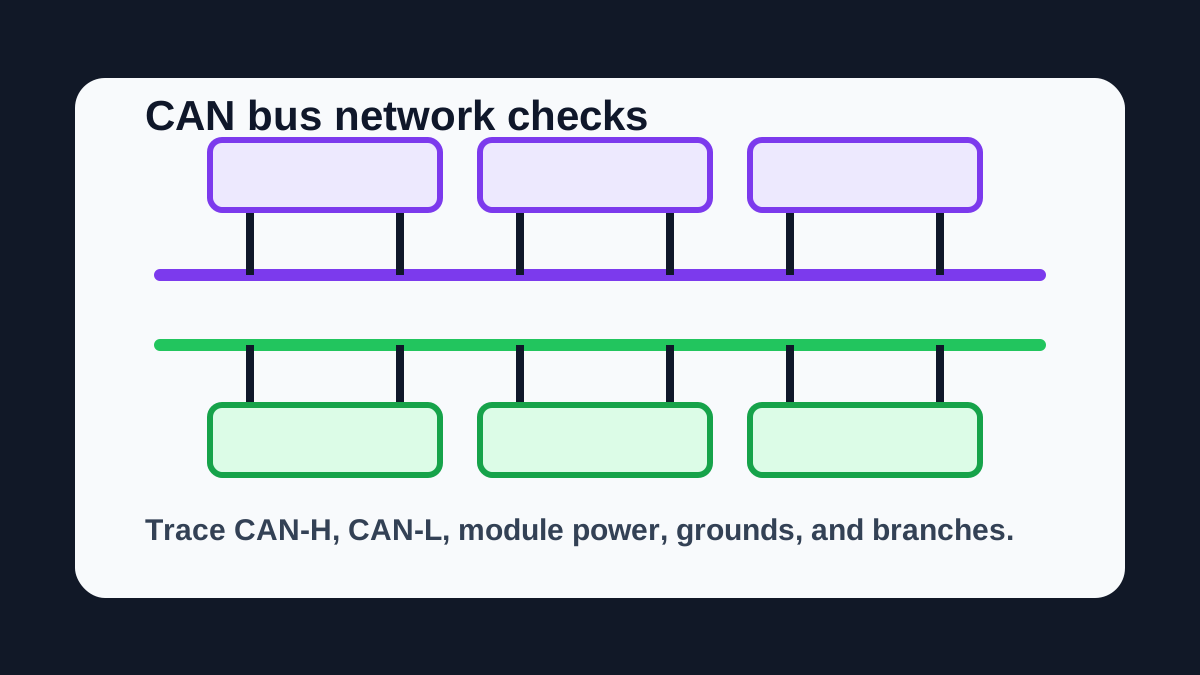
Communication codes need a network view
A U-code or no-communication complaint does not automatically mean a module has failed. The module may be offline because it lost power, lost ground, or sits on a network branch affected by another fault.
Use the computer data lines diagram to see which modules share the same network, where splices are located, and whether the vehicle uses one main bus or several separate networks.
Check power and ground before blaming the bus
A module that has no power or ground cannot communicate. Before chasing CAN high and CAN low, verify the module feeds shown in the diagram, especially ignition-switched feeds and shared grounds.
If several modules on the same fuse stop communicating together, the power distribution path may be more important than the network wires.
Use resistance and voltage tests with the correct network
Many high-speed CAN networks use terminating resistance, but the expected reading depends on network design and whether modules are awake or disconnected. The diagram identifies which pins and branches belong to the network being tested.
Voltage checks can reveal short-to-power, short-to-ground, or line-to-line faults. A clean diagram prevents testing the wrong connector or mixing one network with another.
Isolate branches without losing the fault
If the whole network is down, disconnecting branches at diagrammed connectors can reveal the section that brings the bus back. This is especially useful when water damage or collision repair affects one area.
Do not disconnect modules randomly while the vehicle is powered unless the service process allows it. Plan the isolation steps using the diagram first.
Questions buyers ask
Does every communication code mean a bad module?
No. Wiring faults, missing powers, weak grounds, network shorts, and connector problems are common causes of communication codes.
Why do I need a diagram for CAN bus testing?
The diagram shows the correct network pins, splice points, modules, and branch connectors so the test matches the actual vehicle layout.