
7 min read / Updated 2026-05-08
Prepared by the AutoRepairDiagram catalog team
Horn Wiring Diagram Troubleshooting: Fuse, Relay, Clockspring, and Ground Checks
A practical horn electrical diagnosis guide for no-horn, weak horn, and intermittent horn faults using fuse, relay, switch, clockspring, BCM, and ground circuit references.
Start with the horn symptom
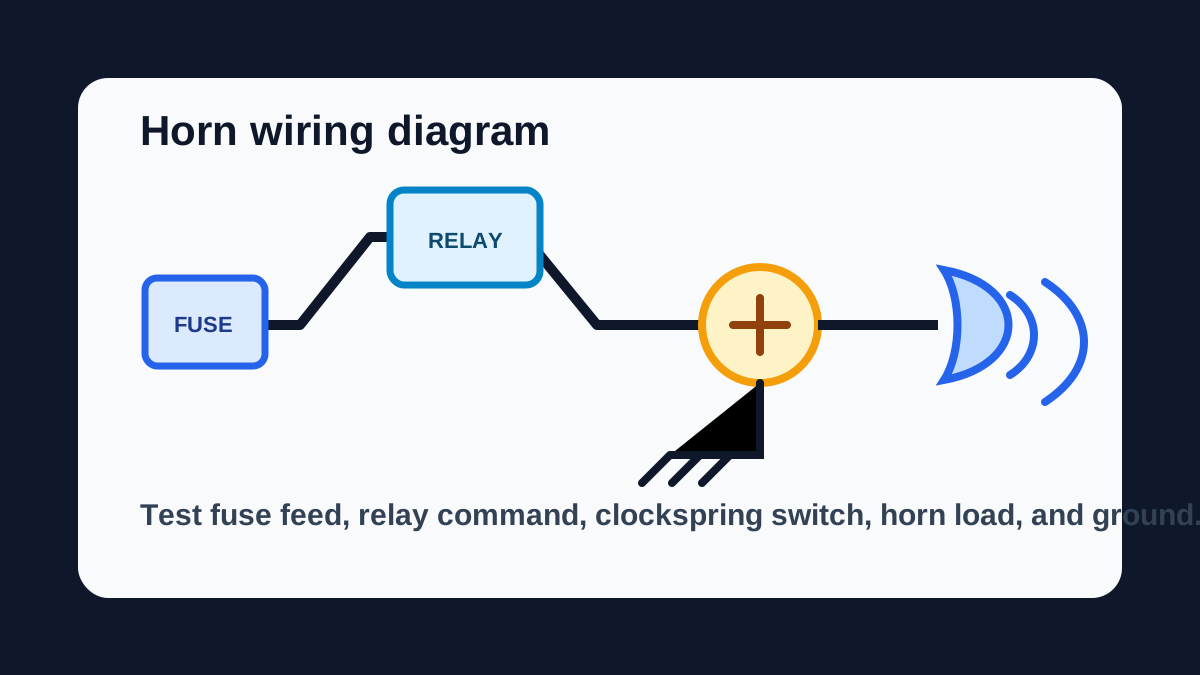
A horn that never works, a horn that sounds weak, and a horn that works only when the steering wheel is turned are different electrical problems. The wiring diagram helps separate the horn load, relay control, steering switch, clockspring, body module, fuse, and ground path.
Before replacing the horn unit, identify whether the circuit uses a simple relay, a body control module command, or a steering wheel switch input through a clockspring. That changes where the first test should happen.
Test the relay command and load sides separately
The relay load side usually carries power to the horn. The relay command side may be controlled by a horn switch, clockspring, BCM, alarm module, or steering wheel control circuit. A click at the relay does not prove horn output is good.
Use the diagram to test battery power at the relay feed, relay output to the horn, control signal, and ground. If the relay command is missing, move toward the switch or module side. If output is missing, focus on relay contacts or feed power.
Clockspring and steering switch faults are common
If the horn works only at certain steering positions, the clockspring or steering wheel switch path becomes suspicious. The diagram shows whether the horn switch grounds a circuit directly or sends a signal to a module.
Always follow safe airbag precautions before working around the steering wheel or clockspring. Horn and airbag wiring can be physically close, but they must not be treated the same way during testing.
Ground and connector checks prevent wasted parts
A horn can receive power but sound weak if the ground path or connector has high resistance. Corrosion, water exposure, front-end repairs, and damaged terminals are common near horn locations.
Voltage-drop testing under load is more useful than a no-load voltage reading. The diagram tells you where to compare horn feed, horn ground, relay output, and shared ground points.
Questions buyers ask
Can a bad clockspring stop the horn?
Yes. If the horn switch signal passes through the clockspring, an open or intermittent clockspring path can stop horn operation.
Why does the horn relay click but the horn does not sound?
The relay command side may be working while the load side, horn unit, connector, fuse feed, or ground path still has a fault.