
7 min read / Updated 2026-05-08
Prepared by the AutoRepairDiagram catalog team
Parasitic Battery Drain Diagnosis With Power Distribution Diagrams
A real-world approach to battery drain testing using fuse maps, module sleep logic, relay feeds, and wiring diagrams to identify the circuit that stays awake.
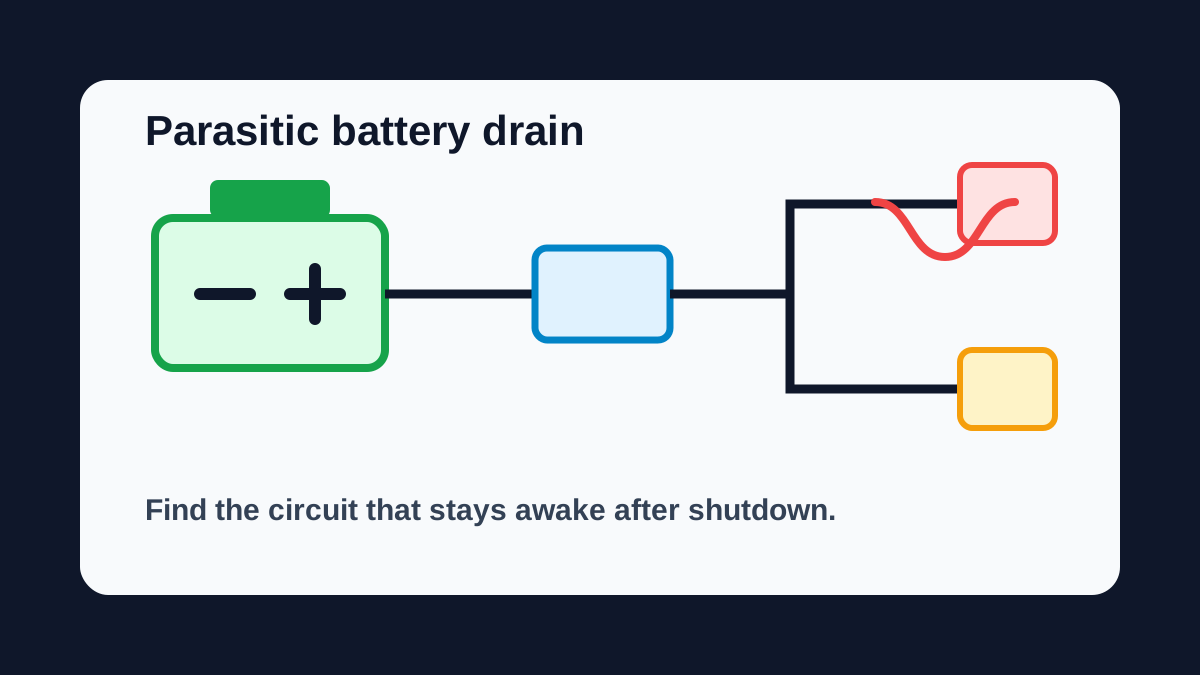
Confirm the drain after modules go to sleep
A modern vehicle can draw higher current for several minutes after shutdown. Before using the diagram, verify that the vehicle has had enough time to enter sleep mode and that doors, keys, chargers, and scan tools are not waking it back up.
Once the draw is confirmed, the wiring diagram and fuse layout help identify which circuits are still powered and which modules are connected to the suspect fuse.
Use fuse isolation carefully
Pulling fuses can wake modules or reset the condition. When possible, use a low-amp clamp, voltage-drop method across fuses, or a method approved for the vehicle. The diagram helps interpret which fuse feeds which branch.
A fuse name may be broad. It can feed a relay, several modules, lamps, memory circuits, or an accessory branch. The diagram turns that broad label into a real test path.
Relays and modules can keep circuits awake
A stuck relay contact, water-damaged module, shorted switch input, or aftermarket device can keep current flowing after shutdown. Power distribution diagrams show which relays are always hot and which loads should be off.
If the drain disappears when one relay is removed, use the diagram to inspect both the relay command side and load side. The relay may be commanded on by a module, or the contacts may be stuck.
Interior, trunk, and body control circuits are common
Small lamps, glove box switches, trunk switches, telematics modules, radio modules, and body control circuits are common drain sources. The diagram helps avoid chasing the whole vehicle when one branch is responsible.
After repair, retest the sleep current and confirm no new warning lights or module communication issues were created during diagnosis.
Questions buyers ask
Can a wiring diagram tell me the correct sleep current?
No. The diagram shows circuit paths. The expected sleep current comes from vehicle service information and the vehicle's installed equipment.
Why does pulling a fuse change the drain test?
Pulling a fuse can wake modules, reset timers, or remove a module from the network. Use the diagram to plan the least disruptive isolation method.